
Welcome to your complete guide to mastering CI/CD pipelines! In today’s fast-paced software development landscape, delivering high-quality applications quickly and consistently is not just an advantage; it’s a necessity. This is precisely where CI/CD pipelines come into play, serving as the backbone of modern DevOps pipelines. They represent a fundamental shift in how teams approach software development, enabling rapid, reliable, and continual integration, testing, and delivery.
Whether you’re looking to understand the basics, optimize your current setup, or embark on a full CI/CD implementation, this guide will walk you through every critical aspect. We’ll explore what these pipelines are, their core components, the immense benefits they offer, and the cutting-edge practices that define them in 2025 and beyond. Prepare to transform your development workflow and accelerate your journey toward true continuous delivery.
Main Highlights: CI/CD Pipelines
At its core, a CI/CD pipeline is an automated framework designed to streamline and improve the software development lifecycle. It bridges the gap between development and operations, ensuring that code changes are integrated, tested, and deployed efficiently. This automation minimizes human error, speeds up release cycles, and ensures a higher quality product.
The term CI/CD encompasses two key practices:
- Continuous Integration (CI): This focuses on frequently merging code changes from multiple developers into a shared repository. Each merge triggers automated builds and tests, allowing teams to detect and address integration issues early and consistently. It’s about maintaining a consistently stable and releasable codebase.
- Continuous Delivery (CD): This extends CI by automating the packaging and preparation of the code for release. It ensures that your software is always in a deployable state, ready for release at any time, though it might still require a manual approval step before going live.
- Continuous Deployment (also CD): Taking it a step further, Continuous Deployment automates the entire release process. Every change that passes all automated tests is automatically deployed to production without manual intervention. This is the ultimate goal for many teams striving for maximum agility.
Together, these principles form robust DevOps pipelines that foster collaboration and deliver software at an unprecedented pace. For a deeper dive into the fundamentals, you can explore resources like what CI/CD pipelines are.
Core Stages of a CI/CD Pipeline
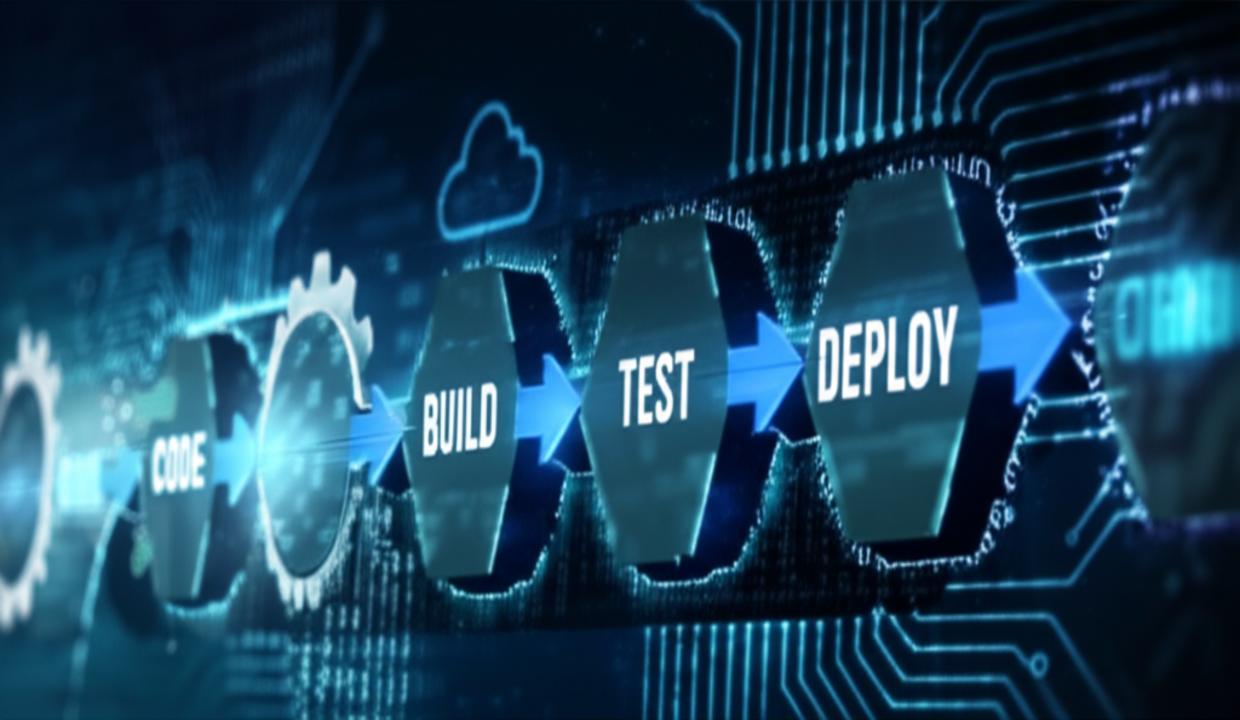
A typical CI/CD pipeline consists of several sequential stages, each triggered by a specific event, most commonly a code commit. These stages work in concert to ensure that software moves smoothly and reliably from development to production.
Source/Commit Stage
This is where the pipeline begins. Developers commit their code changes to a version control system, with Git being the industry standard. Before the code even fully enters the pipeline, modern setups often incorporate pre-commit checks. These include linting to enforce code style, static analysis for potential bugs or security vulnerabilities, and initial security scans. These early checks catch defects and maintain code quality, ensuring a solid foundation for subsequent stages. Peer reviews may also be an integral part of this initial process.
Build Stage
Once code changes are committed, the pipeline moves to the build stage. Here, the source code is compiled into deployable artifacts such as binaries, container images (e.g., Docker images), or executable packages. This stage is crucial for validating that the new code integrates correctly with existing components and complies with defined standards. The goal is to produce reproducible builds, meaning the same code will always produce the same artifact. Automated tools like Jenkins, TeamCity, or cloud services such as AWS CodeBuild orchestrate this process, immediately alerting teams if the build fails, allowing for quick fixes.
Testing Stage
The testing stage is paramount for ensuring software quality. Automated tests run rigorously to verify functionality, performance, and correctness. This stage can encompass a wide array of tests:
- Unit Tests: Verify individual components or functions.
- Integration Tests: Ensure different modules or services work together correctly.
- Smoke Tests: A quick run to ensure the most critical functions work after a build.
- Security Tests: Identify vulnerabilities early in the development cycle.
- Performance Tests: Assess the system’s responsiveness and stability under various workloads.
Many modern pipelines run these tests in parallel to achieve maximum speed. Fast feedback is a defining characteristic here, as catching and repairing bugs early prevents defective code from progressing further, significantly reducing the cost of remediation.
Artifact Generation & Deployment Stage
Upon successful completion of all tests, a deployable artifact is generated. This artifact is a versioned, immutable package ready for deployment. The deployment itself is highly automated, often through scripting, orchestration tools like Kubernetes or Ansible, or declarative methodologies like GitOps. GitOps manages infrastructure and application configuration in Git, which then automatically applies changes to target environments.
This stage often includes deploying to staging environments that closely mirror production. This provides a final validation layer before the software reaches end-users. Tools like Octopus Deploy are often used for managing these complex deployment workflows, ensuring a smooth transition to live environments.
Architecting Resilient CI/CD Pipelines
Building a robust CI/CD pipeline isn’t just about stringing stages together; it’s about designing a resilient, scalable, and secure system. Modern pipelines prioritize consistency and reliability above all else. A key practice involves the use of containerized, isolated environments for builds and tests. Technologies like Docker and Kubernetes ensure that the testing environment is identical to the production environment, reducing the “it worked on my machine” problem and environmental inconsistencies.
Cloud platforms have revolutionized CI/CD implementation. Services from major cloud providers like Amazon Web Services (AWS), Microsoft Azure, and Google Cloud Platform (GCP) offer dedicated CI/CD tools. For instance, AWS provides services like AWS CodePipeline, AWS CodeBuild, and AWS CodeDeploy that integrate seamlessly with code repositories, testing frameworks, and deployment targets, accelerating delivery and simplifying infrastructure management. These services often come with built-in scalability and high availability, critical for large enterprises.
Essential Tools and Technologies for CI/CD
The landscape of CI/CD tools is vast and continually evolving. Choosing the right tools is crucial for a successful CI/CD implementation. Here are some of the most prominent players:
- Jenkins: An open-source automation server, highly extensible with thousands of plugins, making it adaptable to almost any workflow. It’s a workhorse for many organizations.
- GitLab CI/CD: Built directly into GitLab, offering a complete DevOps platform from source code management to deployment. Its tight integration makes it a popular choice for teams using GitLab. You can learn more about its capabilities in a GitLab CI/CD pipeline guide.
- GitHub Actions: A flexible automation platform integrated with GitHub repositories. It allows developers to create custom workflows for various tasks, including CI/CD.
- CircleCI: A cloud-native CI/CD service known for its speed and ease of use, particularly popular among startups and agile teams.
- Azure DevOps Pipelines: Microsoft’s comprehensive suite of DevOps tools, offering robust CI/CD capabilities for both cloud and on-premises environments.
- Argo CD: A declarative, GitOps continuous delivery tool for Kubernetes, enabling automated synchronization of application states with Git repositories.
Beyond orchestration tools, other technologies are vital. Version control systems like Git are foundational. Artifact repositories (e.g., Artifactory, Nexus) securely store and manage build artifacts. Monitoring and logging tools (e.g., Prometheus, Grafana, ELK Stack) provide insights into pipeline performance and deployed application health, ensuring operational “safety” and quick issue resolution.
What’s New in 2025?
The world of CI/CD pipelines is always evolving, with 2025 seeing several exciting trends solidify. One of the biggest shifts is the widespread adoption of GitOps, making declarative infrastructure and application management the norm, particularly for Kubernetes-centric deployments. This approach ensures that your infrastructure and applications are version-controlled, auditable, and easily reproducible.
Security is increasingly “shifting left,” meaning security practices are integrated much earlier into the development process. Automated security scans (SAST, DAST, SCA) are now standard components of the build and test stages, not an afterthought. Furthermore, the rise of AI and Machine Learning is impacting automated testing, with AI-powered tools assisting in test case generation, test optimization, and anomaly detection, making the testing stage even more intelligent and efficient. Observability, the ability to understand a system’s internal state from its external outputs, is also becoming a core component, moving beyond simple monitoring to provide deeper insights into pipeline and application health.
Implementing CI/CD: Strategic Considerations
While the benefits of CI/CD pipelines are clear, successful CI/CD implementation requires strategic planning and investment. It’s not just about tooling; it’s also a cultural shift towards automation, collaboration, and continuous improvement. Organizations must be prepared to invest in:
- Tooling and Infrastructure: Selecting and configuring the right CI/CD tools, whether open-source, commercial, or cloud-native. This includes compute resources for builds and tests.
- Training and Skills: Upskilling development and operations teams in new methodologies, tools, and automation scripts.
- Cultural Change: Fostering a DevOps mindset where developers and operations teams collaborate closely, share responsibilities, and embrace automation.
- Maintenance and Optimization: Pipelines are not “set it and forget it.” They require ongoing maintenance, monitoring, and optimization to remain efficient and relevant.
Considering different “variants” of CI/CD implementation is also important. Some teams might opt for a fully cloud-native approach, leveraging managed services for maximum agility. Others might prefer self-hosted solutions for greater control over their infrastructure. The choice often depends on factors like compliance requirements, existing infrastructure, and team expertise.
Pros and Cons
| Pros | Cons |
|---|---|
| Faster feature delivery and time-to-market. | Significant upfront investment in tools and training. |
| Improved software quality and reliability through extensive automation. | Complexity in initial setup and configuration. |
| Reduced manual errors and consistent deployments. | Requires a significant cultural shift (DevOps adoption). |
| Enhanced collaboration between development and operations (DevOps). | Potential for “tool sprawl” if not managed well. |
| Early detection of bugs and security vulnerabilities. | Ongoing maintenance and optimization are necessary. |
| Reproducible builds and deployments. | Debugging complex pipeline failures can be challenging. |
Advanced Strategies and Best Practices
To truly master CI/CD pipelines, consider these advanced strategies:
- Pipeline as Code: Define your entire pipeline configuration in version control (e.g., YAML files in Git). This ensures versioning, auditing, and reproducibility of your pipeline itself.
- Microservices and Polyglot Pipelines: For microservices architectures, design independent pipelines for each service, allowing for independent deployment and technology stacks.
- Canary Deployments and Blue/Green Deployments: Advanced deployment strategies that minimize downtime and risk by gradually rolling out new versions or maintaining two identical environments.
- Feature Flags: Decouple code deployment from feature release, allowing features to be toggled on/off in production without redeploying code.
- Automated Rollbacks: Implement mechanisms for automatically reverting to a previous stable version if a new deployment causes issues. This enhances reliability.
According to industry experts, the future of DevOps pipelines is increasingly autonomous, with self-healing capabilities and AI-driven insights further reducing manual intervention. Embracing these practices is key to staying competitive and ensuring robust, secure, and efficient software delivery.
FAQ
- What is the primary goal of CI/CD pipelines?
The primary goal is to automate the software delivery process, from code integration and testing to deployment. This automation aims to deliver software faster, more reliably, and with higher quality, while also fostering collaboration between development and operations teams. It minimizes manual errors and speeds up feedback cycles. - How do CI/CD pipelines improve software quality?
CI/CD pipelines improve software quality through extensive automation, particularly in testing. Automated unit, integration, and security tests run with every code change, catching bugs and vulnerabilities early. This fast feedback loop ensures that defects are identified and fixed quickly, preventing them from reaching production and reducing the overall cost of remediation. - Is Continuous Delivery the same as Continuous Deployment?
No, they are closely related but distinct. Continuous Delivery means your code is always in a deployable state, ready for release at any time, but it might still require a manual trigger or approval to go live. Continuous Deployment takes it a step further, automatically deploying every change that passes all tests directly to production without any human intervention. - What role does GitOps play in modern CI/CD?
GitOps is a methodology that uses Git as the single source of truth for declarative infrastructure and applications. In modern CI/CD, it automates deployments by syncing the desired state defined in Git with the actual state of environments, particularly in Kubernetes. This ensures reproducibility, auditability, and faster recovery times. - Can small teams benefit from CI/CD pipelines?
Absolutely! While often associated with large enterprises, small teams and startups can gain significant advantages from CI/CD. It reduces repetitive manual tasks, improves code quality from the outset, and enables faster iteration, allowing small teams to compete effectively by delivering features quickly and reliably.
Conclusion
CI/CD pipelines are no longer just a trend; they are a fundamental pillar of efficient and modern software development. By automating the build, test, and deployment phases, they enable organizations to achieve faster feature delivery, enhance software quality, and foster unprecedented collaboration across teams. Embracing a robust CI/CD implementation is a journey of continuous improvement, one that ultimately leads to more reliable applications and happier customers.
We hope this comprehensive CI/CD guide has illuminated the path to mastering your software delivery. For more insights and to deepen your understanding of these transformative practices, don’t hesitate to explore our other articles on DevOps pipelines and related topics on our website. You can also learn About Us and how we aim to help you master these complex topics. If you have specific questions or need further assistance, please feel free to Contact our experts. #CICDPipelines #DevOps
Watch More in This Video
Disclaimer: All images and videos are sourced from public platforms like Google and YouTube. If any content belongs to you and you want credit or removal, please inform us via our contact page.