
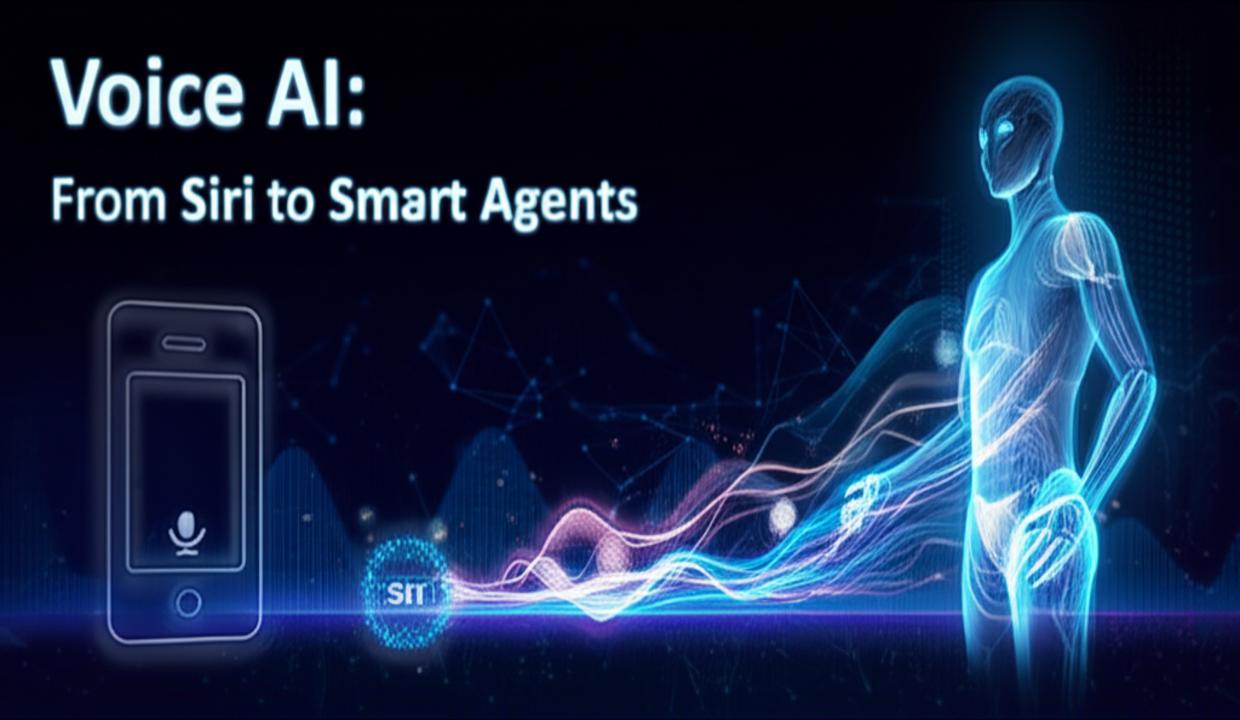
Imagine a world where your technology understands you, not just your words, but your intent, your mood, and your context. This isn’t science fiction; it’s the exciting trajectory of voice AI. We’ve come a long way since the early days of basic voice commands. From the groundbreaking introduction of Siri to the sophisticated capabilities of today’s smart agents, our conversational future is rapidly unfolding.
This article will take you on a journey through the remarkable evolution of voice AI. We’ll explore the foundational technologies, delve into the advanced features that make modern AI assistants so powerful, and peer into the fascinating future of voice technology, where intelligent agents will seamlessly integrate into every aspect of our lives. Get ready to discover how these digital companions are becoming more human-like than ever before.
The Dawn of Voice AI: Siri’s Pioneering Role
The landscape of human-computer interaction fundamentally changed with the arrival of Siri in 2011. Apple’s groundbreaking introduction marked the first time a mainstream audience could experience an AI-driven voice assistant. It was a revolutionary step, bringing the concept of natural language understanding into the palm of everyone’s hand.
Initially integrated into the iPhone 4S, Siri allowed users to perform tasks and ask questions using spoken commands. This made voice interaction accessible and began to shift user expectations. It wasn’t perfect, but it laid the essential groundwork for what was to come, proving the viability and potential of conversational AI.
Expanding Horizons: Tech Giants Join the Voice Revolution
Following Siri’s pioneering efforts, other technology giants quickly recognized the immense potential of voice AI. Google Assistant emerged in 2012, initially as Google Now, focusing on predictive context and proactive information delivery. Then came Amazon Alexa in 2014, famously powering the Echo smart speakers, and Microsoft Cortana, also in 2014.
Each new entrant brought unique strengths, accelerating advancements in natural language processing (NLP), machine learning, and voice recognition. This competitive innovation led to rapid improvements in user engagement and expanded the capabilities of these AI assistants, making them more integral to daily routines.
The collective effort of these companies pushed the boundaries of what voice AI could do. They transformed voice interaction from a novelty into a foundational element of our digital experiences, setting the stage for even more advanced smart agents.
How Voice AI Works: The Core Technologies Unveiled
Behind every seamless voice interaction lies a complex interplay of sophisticated technologies. At its heart, voice AI operates through several critical components. First is speech recognition, which accurately converts spoken words into text, overcoming challenges like accents and background noise.
Once text is generated, Natural Language Processing (NLP) takes over. This crucial component allows the AI assistant to understand the user’s intent, context, and meaning, even with complex or ambiguous phrasing. It’s how the system moves beyond simple keyword matching.
Next, a response generation module formulates an appropriate and helpful answer or action. Finally, text-to-speech (TTS) technology converts this generated response back into natural-sounding voice output. Machine learning algorithms continuously refine these processes, ensuring that interactions improve over time.
These systems are also designed to support multitasking and multi-device scenarios. This means your smart agent can seamlessly switch between tasks or devices, providing a consistent and fluid experience across your smart home or work environment. This foundational understanding helps us appreciate the complexity of modern conversational AI.
Beyond Commands: Advanced Features of Modern Smart Agents
Today’s smart agents are far more than mere command processors. They are evolving into truly intelligent companions, deeply integrated into our digital and physical worlds. A significant leap has been in their ability to be contextually aware, personalizing interactions based on your preferences, habits, and even emotional cues.
Imagine an AI assistant that knows your preferred coffee order, remembers your favorite music genre, or even detects if you’re feeling stressed. This level of personalization offers a far more intimate and tailored user experience, moving beyond generic responses to truly anticipatory assistance.
Furthermore, these agents are now seamlessly integrated with the Internet of Things (IoT) and smart home devices. This enables effortless interaction across diverse environments, from controlling your smart lights and thermostats to managing complex routines. The integration extends far beyond the phone.
Think about its application in healthcare diagnostics, where a voice AI might assist in symptom checking, or in autonomous vehicles, where it could serve as a co-pilot. This pervasive integration is making complex tasks simpler and routine processes more automated, truly enhancing daily life.
The Human Touch: Natural Voice Synthesis and Emotional Nuance
One of the most remarkable advancements in voice AI is the transformation of its auditory output. Gone are the days of robotic, monotone voices. Thanks to breakthroughs in neural text-to-speech (TTS) models and sophisticated machine learning, AI voices have achieved astonishing levels of naturalness, expressiveness, and emotional nuance.
These advanced systems can now adapt their tone and style dynamically to fit the situation. For instance, a smart agent might use a playful, soothing voice when reading a bedtime story to children, or a more serious, informative tone when delivering news updates. This ability to mimic human emotions and vocal inflections significantly enhances the user’s connection with the technology.
The goal is to create an interaction that feels less like speaking to a machine and more like conversing with a human. This evolution in voice synthesis is key to making AI assistants not just functional, but genuinely pleasant to interact with, dissolving the barrier between human and machine communication. This sophistication is a cornerstone of the future of voice technology.
Navigating the Future: Potential, Trends, and Ethical Considerations
The horizon for voice AI is brimming with transformative potential. We are on the cusp of a dramatic shift where AI agents will evolve into genuinely superintelligent assistants. These future systems won’t just process commands; they’ll deeply understand emotional context and user intent, leading to incredibly adaptive, personal, and human-like communication.
Imagine an AI assistant that can anticipate your needs before you even voice them, or one that can engage in nuanced, multi-turn conversations about complex topics. This level of sophistication will make voice AI the primary interface across nearly all digital interactions. We’re moving from a world dominated by text-based input to fully conversational AI ecosystems that listen and respond naturally.
The integration of voice AI into various sectors will expand exponentially. From smart homes to advanced healthcare systems, automotive cockpits, and sophisticated enterprise domains, voice AI will simplify complex tasks, improve accessibility for everyone, and automate countless routine processes, freeing up human potential. #VoiceAI will truly redefine our interaction with technology.
However, this exciting future also brings significant challenges and ethical considerations. Privacy is a paramount concern, especially with always-listening devices collecting vast amounts of user data. Ensuring this data is secure and used responsibly will be crucial for public trust and adoption.
Another critical issue is the potential for bias in AI responses, stemming from the data they are trained on. Addressing these biases and ensuring fairness in AI assistants is a continuous challenge for developers. The need for robust regulatory frameworks that ensure transparency, accountability, and security in these evolving technologies is increasingly urgent.
Watch More in This Video
For a deeper dive into the incredible journey of voice AI and its future, consider watching “Voice AI Evolution 2025 | From Siri to Superintelligence”. This insightful video explores the latest advancements in NLP and the emotional intelligence of voice agents, showcasing their transformative applications in smart living and customer interactions. It truly illustrates how AI voices are now mimicking human emotions and adapting contextually, profoundly transforming how we relate to technology.
Frequently Asked Questions About Voice AI
- What is the biggest difference between Siri and modern smart agents?
The biggest difference lies in contextual awareness and emotional intelligence. While Siri was foundational for understanding commands, modern smart agents can learn user preferences, understand nuanced intent, and even adapt their tone based on emotional cues, leading to far more personalized and human-like interactions. - How do voice assistants become contextually aware?
Voice assistants achieve contextual awareness through advanced machine learning algorithms that analyze user behavior, past interactions, location data, and integrated smart device information. This allows them to anticipate needs and provide relevant, personalized responses, enhancing the overall user experience significantly. - What are the main ethical concerns with voice AI?
Key ethical concerns include user privacy, as always-listening devices collect sensitive data, and potential biases in AI responses due to training data. There’s also the challenge of ensuring transparency in how AI makes decisions and developing robust security measures against misuse. - Will voice be the primary interface for technology in the future?
Many experts predict that voice will indeed become the primary interface for digital interactions. As voice AI becomes more seamless, intuitive, and integrated into smart environments, it will offer a more natural and efficient way to interact with technology than traditional text or touch-based methods. - How will voice AI impact daily life beyond smartphones?
Beyond smartphones, voice AI will deeply integrate into smart homes for environmental control, into healthcare for diagnostic assistance and elderly care, and into automotive systems for navigation and entertainment. It will also revolutionize enterprise operations by automating tasks and improving accessibility.
Conclusion: Your Conversational Future
The journey from Siri’s pioneering steps in 2011 to the sophisticated smart agents of today marks an astonishing technological leap. We’ve witnessed the transformation of simple voice commands into deeply integrated, emotionally intelligent AI assistants that are poised to redefine our daily lives and business operations. The continued advancement in natural language processing and voice synthesis promises a future where technology truly understands us.
As voice AI continues to evolve, expect seamless, proactive, and personalized interactions across all your devices and environments. The future of communication with technology is undoubtedly conversational, natural, and remarkably intelligent. We are truly living in an exciting era for voice AI and smart agents.
What are your thoughts on the future of voice AI? Share your comments below, and don’t forget to explore more articles about cutting-edge technology on our site. You can also learn more About Us and Contact us if you have any questions.
Disclaimer: All images and videos are sourced from public platforms like Google and YouTube. If any content belongs to you and you want credit or removal, please inform us via our contact page.